At Boomerang, we have the privilege of dedicating a share of our profits to various worthwhile causes annually, reflecting our commitment to making a positive impact and putting people at the center of what we do.
Carbon capture will be a key component of mitigating the effects of climate change and reversing global warming. Many of the big, well-funded players in the space are looking into it. But we’re a startup, and consistent with that ethos, we’re looking for high variance, big swing projects that are still too early for more established funding sources like NSF. Think of this as the pre-seed stage of climate tech funding.
Read on to check out some of the projects we’ve backed so far, or submit your proposal.

Projects we’ve supported
Our giving has helped build several schools in Burma, fund a mobile school bus, and support carbon capture research:

2024
Methanol from steel-plant flue gas
Yang Shao‑Horn
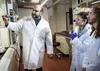
Professor Yang Shao‑Horn and her team at Massachusetts Institute of Technology, developing advanced catalysts that enable the direct conversion of CO₂ (and CO) in steel-making flue gases into methanol. The project focuses on improving catalyst selectivity to make this route economically viable at industrial scale, tackling both a major source of industrial greenhouse gases and meeting growing demand for methanol.
2023
Metal-Organic Framework (MOF) synthesis
Kyriakos Stylianou
Dr. Kyriakos C. Stylianou at Oregon State University, leading a project on bioinspired materials for oceanic carbon capture. The project involves synthesizing metal-organic frameworks (MOFs), which, when exposed to UV light, selectively capture oceanic inorganic carbon and convert it into value-added products such as methanol.

2023
Membranes for CO2 capture
Scott Warren
Prof. Scott Warren at UNC Chapel Hill’s Department of Chemistry, who is developing membranes for capturing CO2 directly from combustion sources using a material discovered by his research team. This research could potentially lead to a 10–50 fold improvement in membrane performance with reduced energy consumption.

2022
Bioplastic manufacturing
John Coates
Professor John Coates at the University of California Berkeley. His proposal involves working on making bioplastics cheaper to manufacture by adapting a species of bacteria to convert methane into bioplastic polymers using perchlorate respiration instead of oxygen respiration. Our team got a detailed look at his research in 2023, and the potential blew us away.

2022
Respiration of photosynthetic organisms
María Maldonado, PhD
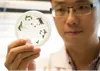
Professor Maria Maldonado of the University of California Davis on her research into the respiratory proteins of giant kelp to develop respiration-based strategies to enhance net carbon capture.
2021
Microalgae-based carbon sequestration
Dr. Yantao Li
We chose micro-algae-driven carbon capture research led by Dr. Yantao Li at the University of Maryland for Boomerang’s 2021 Climate Donation.

2020
Carbon farming
Trent Sunahara, Assistant Director of Development
In year two, the recipient was part of UC Davis, working on soil amendment for better carbon sequestration while providing better crop yield.
2019
Algae-based carbon capture technology
Kenneth Reardon
The first year, we donated to an academic lab at Colorado State working on genetically engineered thin-film microalgae for carbon capture.
Apply for funding
We’re inviting applications from underfunded, US-based academic labs or research organizations working on carbon capture technology to receive up to $50,000 in funding.
We’re looking for projects that are:
- early enough that $50k can make a difference – pre-NSF grant stage, kind of like pre-seed in tech
- researching new technology that relates to carbon capture or carbon reduction (not social science, political science, advocacy, or planting trees)
- ideally creating something commercially viable, so that if it works out the market will take it from there
Please include:
- Name, Organization, and Contact info
- A one-page proposal attachment describing your proposed or current project details and how you would use the funding
- Confirmation that your organization is 501c3 eligible and you will be able to provide a tax-deductible receipt
If you are a researcher or a student working on new carbon capture technology and could use some funding, we invite you to submit your application:
The deadline to apply is Friday, November 14, 2025.
If you’re not a researcher or student, help us find where our donation should go by spreading the word!
If you have any questions, please contact boomerang+carbon@baydin.com.